3 day challenge to freedom from porn addiction

Are you ready to stop the cycle of porn addiction and take back your power and sense of self and self respect ? This 3-day guided challenge gives you the information, tools, techniques and infrastructure to begin your journey to freedom —and stay in porn recovery - in a safe, non-judgmental space guided by a registered psychologist with 35+ years of experience.
By the End of This Challenge, You Will:
✅ Understand what drives your porn addiction
✅ Your brain and porn addiction -the science of porn addiction
✅Why you need more… and longer
✅Values—Behavior Alignment
✅Your porn triggers
✅ Gain tools and techniques to manage urges and emotional triggers
✅ Reconnect with your inner strength and purpose
✅ Walk away with a clear recovery roadmap and architecture
✅The companionship and support fo a band of brothers on the same journey
✅Restoration of your own sexuality and relationships
✅ Enter the Zenitude Zone -grow- stay in recovery
What do you get as part of this course ?
quizzes on your triggers, facing the mirror, motivation, porns impact on yourself and your relationships, urge surfing, porn induced sexual dysfunction etc
multiple PDF downloads
multiple Journaling and self reflection prompts
polls
many freedom and transformational techniques
short empowering, informational and motivational videos
a supportive therapist and community support
a free e-book “3 days to freedom from porn addiction “
an optional porn reboot journey of 30 + days
Break Free. Rebuild Control. Reclaim Your Life.
This powerful 3-day guided journey is designed to help you take your first meaningful step toward freedom from porn addiction. Rooted in clinical psychology and real-world recovery tools, this online challenge offers a safe, structured, and empowering starting point for anyone ready to change.
What You’ll Experience Over 3 Days:
Day 1: Truth & Awareness
Understand the psychological drivers behind porn addiction, how it rewires the brain, and why willpower alone isn’t enough. Begin to unpack the shame, secrecy, and emotional cycles and triggers that keep you trapped.Day 2: Tools for Freedom
Learn proven techniques to manage urges, identify relapse patterns, and interrupt addictive loops. You’ll discover actionable strategies drawn from neuroscience, CBT, and addiction recovery models.Day 3: Transformation, Recovery & Future Focus
Begin mapping your new identity. Replace shame with hope, disempower addiction, and create a personalized plan for your next steps in long-term recovery and healing. Healing your relationships-healing your sexuality. Topics such as personal meaning, connection, and inner growth are addressed.
🎯 Outcomes You Can Expect:
Renewed clarity about what drives your addiction
Practical tools to manage triggers and urges
Deep insight into self-sabotaging cycles
Increased self-compassion and motivation to change
A sense of momentum and a clear plan forward
Recovery scaffolding and architecture
Restoring your own sexuality and relationships
Support from an experienced psychologist and a community group rooting for your success
Ready for Deeper Transformation?
Join the 30-Day Porn-Free Bootcamp
The 3-Day Challenge is your first step. The 30-Day Bootcamp is where the real breakthrough happens. You’ll get:
Daily guidance and recovery prompts
Advanced psychological tools and support
Access to a private community of fellow travelers
Progress tracking and accountability
🟢 Unlock your next level of healing and resilience.
👉 Enroll in the 3-Day Challenge now and get exclusive access to the Bootcamp invitation after completion.
For those ready to go deeper, the 30-Day Porn-Free Life Bootcamp offers daily guidance, advanced techniques, community support, and accountability. It’s where real habit change and inner transformation happen—step by step. Research is clear - a guided and supportive bootcamp journey raise your chance for success and freedom from porn addiction.

Coming Soon !!! “The Peter Pan Syndrome” for men that refuse grow up and for the women and parents that love them
.He is charming. Creative. Full of life. He makes you feel, at first, like the world is wider and more alive with him in it.
And then — slowly, unmistakably — you notice he never quite lands. Commitments hover but don't hold. Plans shimmer but dissolve. Responsibilities circle overhead like weather that never breaks. Bills doesn’t get paid, jobs doesn’t work out, bosses are unfair and harsh, plans gets delayed or side tracked - he is almost there-but never there. He is sort of between heaven and earth -flying- but not grounded in this earthly reality. Neverland is a beautiful place to visit. No one should have to live there.
He is not lazy. He is not stupid. He is, in the language of Carl Jung, the Puer Aeternus — the eternal boy. An archetype as old as myth itself: Icarus flying toward the sun, Dionysus chasing sensation, Peter Pan in his defiant Neverland. Brilliant. Allergic to gravity. And allergic to real life with its grown up challenges. He can be 20 years old, some are 30 years old and I have worked with ones in their 50,s. The problem is: they all take you to Neverland.
The problem is not a lack of ability. It is a specific relationship to life — one characterized by hovering above rather than landing, by living in possibility rather than in reality.
This course is not a verdict. It is not a shaming. It is an invitation — to men willing to ask an uncomfortable question: Am I actually living my life, or am I still waiting for it to begin?
Because the Puer Aeternus is not simply a man who refuses to grow up. He is a man whose psychology never received what it needed to make that crossing. Unresolved parental complexes. Unresolved mother complex issues. A provisional life. A psyche still identified with the divine child archetype — where everything is possible, nothing is final, and commitment feels like a kind of death.
The women (Wendy’s) who love these men know the exhaustion of carrying the adult weight for two. This course sees them too — without blame, without bitterness, with clear eyes. But the Wendy’s also need to see their patterns of enabling the eternal boy-from never growing up.
This for the parents too- that keep on bailing him out, paying his way, subsidizing his lifestyle, dreams and “allmosts” , arranging jobs, and ask “where did we go wrong”
If you have a Peter Pan in your life, or know of one -this course is for him -and for the enabling Wendy’s- the woman an dparents in his life- the enablers. The course identifies the various kinds of Peter Pans -and with case studies of typical Peter Pans. You will find yours there- with the solutions too.
Who Is This Course For?
Men who feel full of potential but struggle to turn plans into consistent action. They may be creative, intelligent and persuasive, yet repeatedly delay, abandon or avoid the responsibilities of adult life.
Men who are always “almost there.” The next job, business idea, qualification or breakthrough is always around the corner, but progress rarely becomes stable, measurable or sustainable.
Men who resist commitment, structure and accountability. They may experience routine, limits, responsibility or long-term decisions as restrictive, suffocating or threatening.
Women who love a Peter Pan. This includes partners and wives who feel they are carrying the finances, planning, emotional labour, household responsibilities and adult decision-making for two people.
Parents who repeatedly rescue an adult son. They may still be paying debts, arranging jobs, financing dreams, solving crises or protecting him from the natural consequences of his choices.
Partners and family members who may be enabling the pattern. The course helps them recognise how rescuing, over-functioning, excusing and removing consequences can unintentionally prevent maturity.
Anyone who wants to understand the different Peter Pan types. Through assessments, practical explanations and realistic case studies, you will be able to identify the pattern and explore concrete pathways toward responsibility, independence and grounded adulthood.

Coming soon ! What’s your mating call? Why you keep calling in the same person — with a different face.
There is a question I ask my patients that stops most of them cold.
"What's your mating call?"
The silence that follows is telling. Because somewhere in that silence, a recognition stirs — that the pattern they're describing isn't bad luck. It isn't a string of wrong choices. It is a signal. One they have been broadcasting, mostly without knowing it, for their entire adult life.
You have a mating call. Everyone does. It is not a conscious decision. It is a frequency — shaped in childhood, rehearsed in your family system, and transmitted into every significant relationship you have ever entered. And here is what over three decades of clinical practice has shown me: most people's mating call summons the same essential person, again and again. Different name. Different face. Same wound.
The question is never only "why do I keep choosing the wrong partner?" The deeper question is: what am I signalling — and why does that signal feel like home?
This course is built on two clinical observations that I have watched unfold in practice, consistently, across thousands of hours of therapy. First: that most people unconsciously select a partner who shares seven to ten out of fifteen core traits with their opposite-sex parent — not because they are damaged, but because the psyche recognises what is familiar as what is safe. Second: that beyond the person they choose, people replicate the relationship itself — the emotional temperature, the dynamic, the unspoken contract — modelled almost exactly on what they witnessed between their own parents.
You did not only inherit their eyes or their stubbornness. You inherited their relationship.
This course does three things. It helps you identify your mating call — the unconscious signal you are sending. It equips you to consciously choose differently, with your eyes fully open. And for those already in relationship, it offers a pathway to repair — to understand why this particular person activated this particular wound, and what that activation is actually asking of you.
The goal is not to break the pattern through willpower. It is to understand it so completely that it loses its grip — and something genuinely new becomes possible.
Your mating call is not your destiny. But you cannot change a frequency you cannot hear.
Who Is This Course For?
People who keep choosing the same kind of partner in a different body. The names and circumstances may change, but the emotional wounds, frustrations and relationship dynamics remain remarkably familiar.
People who wonder, “Why do I always attract the wrong person?” This course helps you move beyond blaming bad luck and identify the unconscious signals, expectations and vulnerabilities shaping your choices.
Singles who want to choose their next partner more consciously. You will learn to distinguish genuine compatibility from attraction that merely feels powerful because it resembles something familiar from childhood.
People who recognise traits of a parent in their romantic partners. You may repeatedly choose someone who is emotionally unavailable, critical, controlling, dependent, unpredictable or in need of rescuing because these qualities unconsciously feel like home.
Couples who keep repeating the same painful conflict. The course helps you understand why this particular partner activates this particular wound—and how to respond with greater awareness rather than reenacting the same cycle.
People who grew up observing an unhealthy or emotionally confusing relationship between their parents. You may have unconsciously inherited not only their beliefs about love, but also their emotional temperature, roles, power struggles and unspoken relationship contract.
People recovering from a breakup, divorce or repeated relationship disappointment. Instead of asking only what was wrong with the other person, you will explore what drew you into the relationship and what the experience may be asking you to heal.
Anyone ready to change their relationship pattern rather than merely change partners. Your mating call is not your destiny, but you cannot change a signal you have never learned to recognise.

Coming soon !- Break the chains of generational trauma It stops with you.
Something was handed to you that you never asked for.
Not a gift. Not an inheritance in the ordinary sense. Something quieter and far more persistent — a way of being afraid, a way of shutting down, a way of loving that feels achingly familiar even when it is causing you harm. You did not choose it. But you have been living it, and in ways you may not yet fully see, you have been passing it on.
This is generational trauma. Not a metaphor. Not an excuse. A documented, clinically observable reality — encoded in family systems, in attachment patterns, in the nervous system itself. Murray Bowen showed us how emotional patterns transmit across generations with quiet, relentless precision. Jung named the ancestral shadow — the inherited psychic material that lives in us as if it were our own, shaping our fears, our relationships, our sense of what we deserve. Emerging epigenetic research now suggests the body itself may carry the memory of what our ancestors endured.
You are not broken. You are the latest carrier of something that was broken long before you arrived. That is a different thing entirely — and it changes what healing looks like.
The pain is real. The anger, the anxiety, the patterns that keep surfacing no matter how hard you try — these are not character defects. They are signals. They are the family system speaking through you, asking — in the only language it knows — to be finally heard, finally metabolised, finally released.
This course does not invite you to blame your parents. They too were carriers. It invites something far more demanding and far more liberating: to become the person in your lineage who sees clearly enough to stop.
Bowen distinguished between breaking away from a family and growing away from it. This course is about growing away — remaining connected, remaining human, but no longer unconsciously bound. It is about understanding what was handed to you, grieving what that cost you, and making a different choice — not just for yourself, but for everyone who comes after you.
The chain does not have to continue. But it will not break by itself.
Who Is This Course For?
People who keep repeating painful family patterns despite promising themselves they would be different. You may recognise the same anger, emotional withdrawal, anxiety, control, addiction or relationship instability that existed in earlier generations.
People who carry fear, shame or emotional burdens that seem larger than their own life experiences. The course helps you explore whether some of what you feel was learned, inherited or absorbed within your family system.
Adults raised in families marked by trauma, loss, addiction, abuse, conflict or emotional neglect. Even when the original events happened before you were born, their effects may still shape attachment, communication and emotional safety.
Parents who fear passing unresolved wounds to their children. You may notice yourself reacting in ways that resemble your own parents and want to create a healthier emotional inheritance.
People who struggle with boundaries, guilt or loyalty within their family. You may feel responsible for keeping everyone stable, protecting family secrets or sacrificing your wellbeing to remain connected.
People who want to understand their family without simply blaming it. This course recognises that parents and grandparents were often carriers of unresolved trauma too, while still holding space for the real impact their behaviour had on you.
People who have distanced themselves from family but still feel emotionally controlled by the past. Physical separation does not always create psychological freedom; the patterns may continue internally and within new relationships.
Anyone who wants to become the cycle-breaker in their family line. The goal is not to erase the past, but to understand what was handed to you, grieve its cost and consciously choose what will—and will not—be passed forward.

A life free from imposter syndrome-You have built something real. It is time to believe it.
Here is what nobody tells you about imposter syndrome: it does not visit the incompetent. It targets the capable, the conscientious, the high-achieving — the professional who prepares more than anyone in the room and still walks in convinced they are the least qualified person there.
You got the promotion. You delivered the results. You have the credentials, the track record, the room full of people who trust your judgement. And yet — quietly, persistently — a voice insists it is only a matter of time before someone notices you don't belong.
That voice is not insight. It is not humility. It is a measurable, documented cognitive distortion — and it is costing you more than you know.
Research consistently shows that up to 70% of high-achieving professionals experience imposter syndrome at some point — and that it is robustly linked to burnout, self-sabotage, and workaholic behaviour. The pattern is clinically precise: you achieve, you feel brief relief, then the anxiety resets. You attribute your success to luck, timing, or other people. You attribute your failures to personal inadequacy. You work harder to outrun an exposure that never comes — because the fraud does not exist.
This course does not offer affirmations. It does not ask you to think positively. It goes directly to the attribution patterns, the self-monitoring loops, and the identity beliefs that keep the imposter narrative alive — and it dismantles them, methodically, one day at a time.
Name the pattern : Identify precisely how your imposter operates — its triggers, its language, its timing.
Dismantle the story: Reattribute your competence accurately. Evidence-based. Unflinching.
Own your seat at the table: Build the identity and daily practices that make the imposter voice structurally redundant.
Focused. Actionable. Grounded in over three decades of clinical practice and the neuroscience of self-belief. You have earned your place at the table. This challenge is about finally knowing it.
Who Is This Course For?
Capable professionals who privately fear they are not as competent as others believe. Despite qualifications, experience and proven results, you may worry that you have somehow fooled people into overestimating you.
High achievers who struggle to internalise their success. You may credit achievement to luck, timing, help from others or unusually easy circumstances while treating every mistake as evidence of personal inadequacy.
People who overprepare, overwork and overperform to avoid being exposed. The fear of not being good enough may drive perfectionism, exhaustion and an inability to feel that your work is ever complete.
Leaders, managers and specialists who feel they do not deserve their position. You may have earned your promotion or authority but still hesitate to speak confidently, make decisions or fully occupy your role.
Students, graduates and early-career professionals entering demanding environments. New responsibilities, competitive workplaces or unfamiliar expectations may trigger intense self-doubt even when you are appropriately qualified.
Entrepreneurs, educators, clinicians and creatives who compare their private uncertainty with other people’s public confidence. You may assume everyone else feels certain and capable while you alone are improvising.
People whose perfectionism leads to procrastination or self-sabotage. Fear of producing imperfect work may cause you to delay opportunities, avoid visibility, minimise your ambitions or withdraw before you can be evaluated.
Anyone who is tired of needing constant achievement to feel temporarily adequate. This course helps you identify the imposter pattern, evaluate your competence more accurately and begin owning your place at the table.

Coming soon ! Relationship Alchemy Small habits. Extraordinary love.
New couples Established relationships Married couples
Most relationships do not fail dramatically. They fade — one small neglect at a time. A bid for connection missed. A repair attempt ignored. An appreciation unspoken. A moment of turning away instead of toward. None of it feels decisive. All of it compounds.
The same is true in reverse. Relationships do not become extraordinary through grand gestures. They become extraordinary through the accumulation of small, deliberate habits — practised consistently, grounded in genuine understanding, executed with skill. This is what the science of relationships, distilled across four decades of research and over thirty-five years of clinical practice, keeps confirming: the micro-behaviours are the relationship.
Every small act of genuine connection triggers oxytocin — the brain's bonding signal. Over time, consistent micro-habits do not just improve a relationship. They neurologically rewire both partners toward each other.
Relationship Alchemy is a distilled, skills-based course built on one core insight: that the difference between a relationship that merely survives and one that genuinely thrives is not compatibility, chemistry, or luck. It is a specific set of habits, insights, and skills — learnable, practicable, and transformative when applied with consistency.
Whether you are building something new and want to build it right, reigniting a relationship that has grown comfortable but distant, or sustaining a marriage that you want to deepen rather than simply maintain — this course meets you exactly where you are.
The art of turning toward : Recognising and responding to bids for connection — the micro-skill that predicts long-term relationship success more than any other.
Repair before rupture: How to interrupt disconnection early, before it calcifies into resentment. The habit that keeps the emotional bank account in surplus.
Deep knowing: Building and maintaining a living map of your partner's inner world — their fears, dreams, stressors, and evolving self.
Conflict as connection: Transforming the inevitable friction of two lives into a source of understanding rather than erosion.
Alchemy was once the pursuit of transforming base metals into gold. The alchemists were wrong about chemistry. They were exactly right about the principle: with the right process, the right knowledge, and consistent practice, ordinary materials become something extraordinary.
Your relationship is already the raw material. This course is the process.
Who Is This Course For?
New couples who want to build strong relationship habits from the beginning. This course helps you create a foundation of emotional safety, healthy communication, appreciation and intentional connection before unhelpful patterns become established.
Couples in established relationships who feel comfortable but less connected than they once were. You may still love each other deeply, yet notice that routine, work, parenting and daily responsibilities have gradually replaced curiosity, affection and meaningful attention.
Married couples who want to deepen their relationship rather than merely maintain it. The course provides practical habits for strengthening friendship, protecting intimacy and continuing to know one another as both partners grow and change.
Couples who repeatedly miss each other’s bids for connection. Small attempts to talk, touch, share, laugh or seek reassurance may be overlooked, misunderstood or dismissed, creating distance that neither partner intended.
Partners who want to prevent resentment from accumulating. You will learn how to recognise disconnection early, make effective repair attempts and address small hurts before they harden into emotional withdrawal or chronic conflict.
Couples who struggle to communicate during disagreement. This course helps you move away from criticism, defensiveness, contempt and avoidance, and toward calmer conversations that create understanding rather than further damage.
Partners who want to understand each other more deeply. You will learn how to maintain a living knowledge of your partner’s inner world—their fears, pressures, dreams, needs and changing emotional landscape.
Couples who believe love should be practised, not simply felt. Relationship Alchemy is for partners willing to use small, consistent and learnable habits to transform an ordinary relationship into one that feels secure, alive and deeply connected.

Coming Soon ! Soul-mating Yes, it is possible. And it begins with becoming.
Every culture in human history has believed in this. Ancient China described an invisible red thread — tied by the lunar matchmaker god around the fingers of those destined to find each other — that may stretch, may tangle, but can never break. Ancient Greece, through Aristophanes, told of humans originally created whole, with four arms, four legs and two faces, split apart by Zeus and condemned to spend their lives searching for their other half. Hindu tradition speaks of twin flames — two expressions of one soul, destined to reunite across lifetimes.
Across every civilisation, in every age, human beings have felt the same thing: that somewhere, there is a person who is not simply a partner but a homecoming.
Ancient China: The red thread- Invisible. Unbreakable. Already tied — awaiting its moment.
Ancient Greece: The split soul-Two halves of one whole, searching across lifetimes to be complete.
Hindu tradition: Twin flames-One soul, two expressions — drawn back to union across time.
But here is what the myths — beautiful as they are — get wrong. They place the soulmate outside you, waiting to be found. They frame love as discovery rather than creation. They suggest that your deepest connection is something that happens to you — a destiny, a gift, a cosmic collision.
After more than three decades of clinical practice, sitting with thousands of human beings in their most intimate and most broken moments, my clinical thesis is this:
Soulmates are not found. They are not born. They are not waiting. They are built — slowly, consciously, courageously — by two people willing to do the profound work of becoming fully known to each other, and fully themselves.
Plato himself — who gave us Aristophanes' myth — actually believed the same thing. The split-soul story was a gentle satire of romantic fantasy. His deeper teaching was that true love is not the solution to incompleteness but the product of two already-whole people choosing each other with full consciousness, again and again.
Soul-mating is a course about that choosing. It is about the best friend who is also your lover. The safe place that is also your most honest mirror. The soft place to fall that asks you, gently and persistently, to become the fullest version of yourself. The warmth that does not demand you perform, and the love that sees you without the performance — and stays.
This quality of connection is real. It is documented, observable, and deeply human. It is also — and this is the part the myths never tell you — the result of two people who chose to become it, one act of genuine presence at a time.
The red thread exists. You are the one who weaves it.
Who Is This Course For?
Couples who want to become true life partners, not merely romantic companions. Soulmating is for two people who want to build a relationship grounded in friendship, emotional safety, attraction, honesty and shared growth.
New couples who want to move beyond chemistry and create lasting depth. The course helps you transform early attraction into genuine knowledge, trust, commitment and conscious partnership.
Established couples who love each other but feel emotionally disconnected. You may still share a life, home or family while missing the closeness, curiosity and sense of homecoming you once experienced.
Married couples who want to deepen rather than simply maintain their bond. Soulmating provides practical ways to keep choosing, knowing and supporting each other as both partners change over time.
Partners who want to feel fully known without having to perform. This course helps couples create a relationship where vulnerabilities, fears, dreams and imperfect parts can be shared without ridicule, rejection or withdrawal.
Couples who want to be both best friends and lovers. You will explore how emotional intimacy, playfulness, affection, admiration and sexual connection can be cultivated together rather than treated as separate parts of the relationship.
People who have been waiting to “find the one” and are ready to rethink the soulmate myth. The course shifts the focus from searching for a perfect person to becoming the kind of partner capable of building extraordinary love.
Couples willing to choose each other consciously and repeatedly. Soulmating is for partners who understand that profound connection is created through consistent presence, courageous honesty, mutual responsibility and thousands of small acts of love.
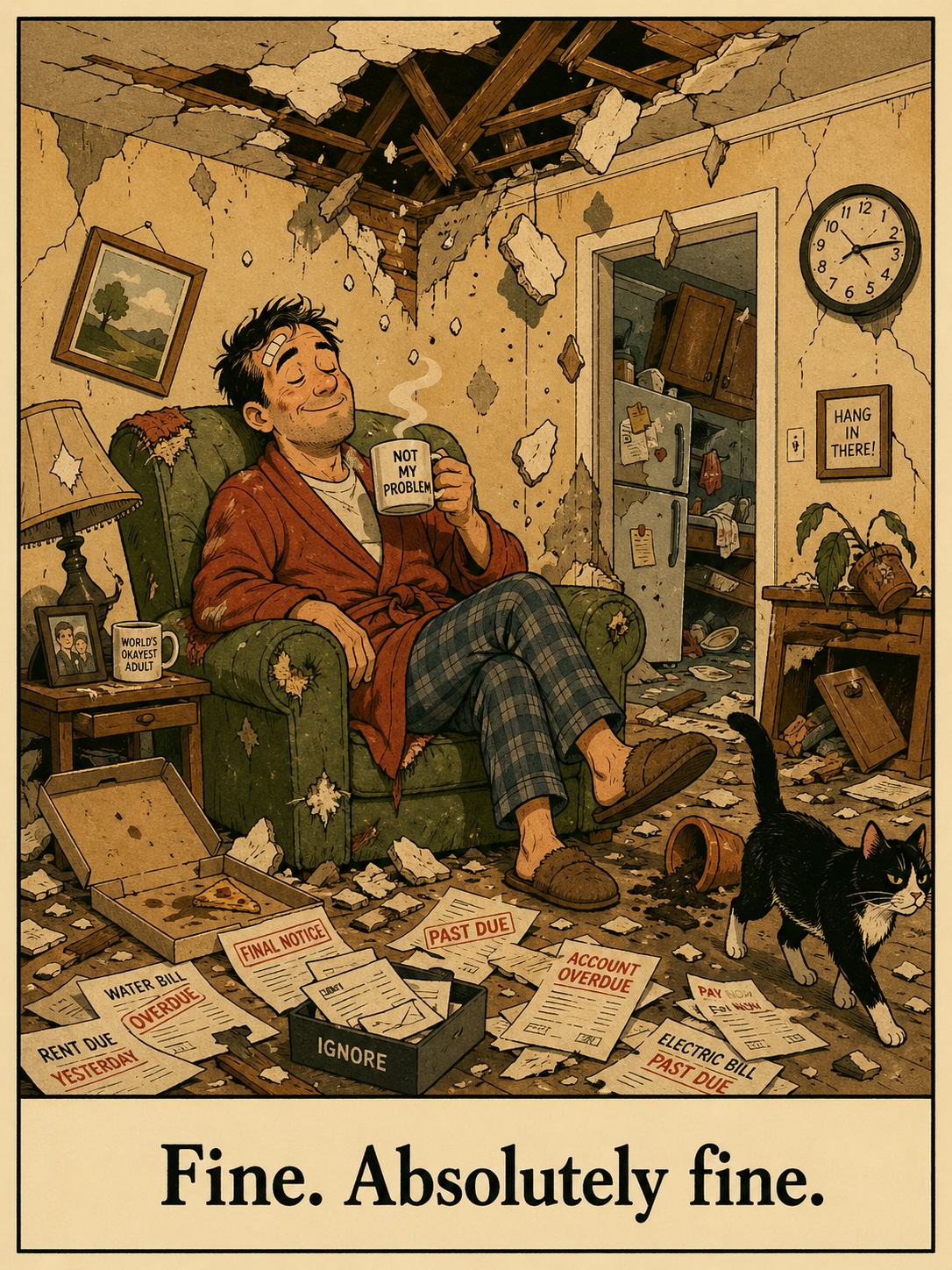
Coming Soon ! -Callouses of the Soul- A survival guide for when life goes completely sideways.
Let us be honest about something first. Life has a curriculum. Nobody signed up for it. Nobody agreed to the syllabus. And the lessons it delivers — the betrayals, the losses, the spectacular failures, the humans who treat you as though your dignity is optional — arrive without warning, without apology, and occasionally without any discernible logic whatsoever.
You did not deserve most of it. Some of it you did not see coming. Some of it came from people who should have known better. Some of it — and this is the part nobody likes to say out loud — came from the universe simply being the universe: indifferent, unscheduled, and completely unbothered by your plans.
Welcome to being alive.
A callous does not form randomly. It forms precisely where the skin has been subjected to repeated pressure and friction — where the body has decided that this particular point needs to be stronger. The soul works the same way. It just takes considerably longer, and hurts considerably more.
This course is named after that biological fact — because it is the most honest metaphor for what suffering, navigated well, actually does. Not the sanitised version. Not the social media version where adversity is a glow-up montage set to an inspiring soundtrack. The real version: where it is ugly, where it takes time, where you question everything — and where, on the other side, something in you is demonstrably tougher, wiser, and more authentically yourself than it was before.
The Stoics knew this. Marcus Aurelius — emperor, philosopher, man beset by war, plague and personal loss — wrote to himself: "A blazing fire makes flame and brightness out of everything thrown into it." Seneca was blunter: "Fire tests gold, suffering tests brave men."Tedeschi and Calhoun's post-traumatic growth research confirmed what the ancients intuited — that as many as 89% of trauma survivors report genuine positive change emerging from their struggle. Not instead of the pain. Alongside it. Sometimes -because of it.
This course covers the territory nobody prepares you for: how to survive disappointment and set-backs and failure without becoming bitter. How to process failure without letting it define you. How to navigate other people's behaviour — their cruelty, their carelessness, their stunning capacity for self-interest — without losing your own humanity in the process. How to rebuild self-belief when life has systematically dismantled the version you had. And how to find, in the wreckage of what did not work, the precise materials you need for what comes next.
"The impediment to action advances action. What stands in the way becomes the way." Marcus Aurelius — Meditations
You are not here because life broke you. You are here because you are still standing — and you want to understand what that is worth, and what it means to build something from it.
That is not resilience. That is alchemy. And it is entirely possible — with the right guide, the right framework, and the full, unflinching truth about what you have already survived.
Who Is This Course For?
People who have endured repeated setbacks, disappointments or losses and are tired of merely surviving them. You want to understand how adversity has shaped you—and how to use what remains to build something stronger.
People rebuilding after betrayal, rejection or the cruelty of others. This course helps you process what happened without allowing bitterness, mistrust or resentment to become your permanent identity.
People whose confidence has been dismantled by failure. You may no longer trust your judgement, abilities or future, even though you have already survived more than you give yourself credit for.
People facing a major life transition they did not choose. Divorce, unemployment, financial collapse, illness, bereavement or an unexpected ending may have destroyed the life you expected and left you unsure what comes next.
People who appear strong but feel exhausted underneath. Others may admire your resilience while you privately carry grief, anger, disappointment and the pressure to keep functioning.
People who want to become stronger without becoming harder. You want boundaries without emotional walls, wisdom without cynicism and self-protection without losing your compassion or humanity.
People who keep asking, “Why did this happen to me?” This course does not offer simplistic answers, but helps you move toward a more useful question: “What can I now make from what happened?”
Anyone ready to transform suffering into wisdom, courage and renewed purpose. Callouses of the Soul is for people who are still standing—and are ready to recognise the strength, meaning and possibility contained in that fact.

Coming Soon! Affair and Infidelity Recovery
When Trust Has Been Broken, Healing Requires More Than an Apology
Move from Betrayal, Confusion and Emotional Chaos Toward Clarity, Safety and Healing
An affair can shatter trust, destabilize a relationship and leave both partners unsure about what to do next.
The betrayed partner may experience shock, intrusive thoughts, anger, anxiety and an urgent need for answers. The partner who was unfaithful may feel guilt, shame, fear and uncertainty about how to repair the harm.
Infidelity and Affair Recovery is a compassionate, psychologically informed course for individuals and couples who need structured guidance after betrayal.
This course will not pressure you to forgive, reconcile or remain together. It will help you understand what has happened, stabilise the emotional crisis and make healthier decisions about your relationship and future.
[BEGIN YOUR RECOVERY JOURNEY]
What This Course Can Help You Do
Through practical guidance, reflection exercises and relationship recovery tools, you will learn how to:
Understand betrayal trauma and the emotional impact of affair discovery
Manage intrusive thoughts, anger, anxiety, grief and emotional triggers
Communicate about the affair without every conversation becoming destructive
Distinguish genuine accountability from excuses, defensiveness and blame-shifting
Establish boundaries that promote emotional safety
Approach disclosure and difficult questions more responsibly
Recognise the behaviours required to rebuild trust
Decide whether reconciliation is possible, realistic and healthy
Begin restoring dignity, stability and personal confidence
Trust cannot be repaired through promises alone. It is rebuilt through honesty, empathy, transparency and consistent behaviour.
[ENROL IN INFIDELITY AND AFFAIR RECOVERY]
Who Is This Course For?
This course may be right for you if:
You have recently discovered an affair and feel emotionally overwhelmed
You have ended an affair but do not know how to repair the damage
You are trapped in repeated cycles of questioning, arguing, withdrawing or defending
You feel unsure whether to stay, separate or attempt reconciliation
You want to understand what genuine remorse and accountability look like
You need practical guidance before, during or alongside couples therapy
You want to recover personally, regardless of what happens to the relationship
You may complete the course individually or work through selected sections together as a couple.
Healing Does Not Mean Pretending It Never Happened
Recovery is not about returning to the relationship exactly as it was.
It is about facing the truth, understanding the damage and determining what must change. For some couples, this process creates the foundation for a more honest and emotionally connected relationship. For others, it supports personal healing and a respectful separation.
You do not need to know the final outcome today.
You only need to take the next honest and constructive step.
[START THE COURSE TODAY]
Begin Moving from Secrecy and Betrayal Toward Clarity, Accountability and the Possibility of Renewed Trust
[GET IMMEDIATE ACCESS]
Don't let the old man in- The health span course for men who are nowhere near done.
I am 65. I train. I study the science. I take my cat seriously as a longevity strategy. And I present, by most accounts, as someone who skipped a decade somewhere — which I take as confirmation that the approach is working.
Here is what I have learned: there is an old man waiting to move in. He arrives not dramatically but gradually — in the excuses, the early nights, the "I used to," the quiet surrender to a body you stopped investing in, a mind you stopped challenging, a life you started watching rather than living. He does not knock loudly. He just makes himself comfortable while you're not paying attention.
You do not have to let him in.
Some men die at 50 and are only buried at 75. The WHO confirms it in numbers: global healthy lifespan lags nearly a decade behind total lifespan. The gap is not inevitable. It is largely a lifestyle gap — and lifestyle is entirely within your jurisdiction.
This is the part nobody tells you with sufficient urgency: the difference between a man who is vital, sharp, strong and genuinely alive at 65, 70, or 75 — and one who is merely present — is not primarily genetic. It is not luck. It is a set of daily decisions, practised with consistency and informed by both science and hard-won wisdom, that compound over time exactly like interest. The right decisions accumulate into something extraordinary. The wrong ones — or simply the absent ones — accumulate into something else entirely.
9.6: years the average health span lags behind lifespan — WHO data
40%: of chronic disease in ageing men is attributable to lifestyle, not genetics
+7: years added to healthy lifespan by pet ownership — research confirmed
This course covers everything the old man does not want you to know. Exercise science for men over 40, 50, 60, 70 — what actually works, what is a waste of time, and why strength training is not optional. Nutrition without the noise. Sleep as a non-negotiable performance strategy. The Stoic principles that make self-discipline feel like self-respect rather than punishment. The mindset habits that keep you curious, engaged and genuinely looking forward to Mondays. Regular medical check-ups framed not as concessions to ageing but as intelligence gathering for the next decade. Relationships — because isolation is as lethal as smoking, and the research on this is not subtle. And your pet, who may be doing more for your longevity than your supplements.
Body — train like you mean it: Exercise science, strength, mobility and the non-negotiables of physical vitality past 50.
Mind — stay dangerously curious: Youth mindset, Stoic discipline, purpose and the psychology of men who refuse to plateau.
Health — intelligence, not fear: Nutrition, sleep, check-ups and the science of adding life to your years, not just years to your life.
Connection — your secret weapon: Relationships, community, your partner, your friends — and yes, your cat.
Clint Eastwood was 88 when he said it. I heard it at 65 and recognised it immediately as the most useful piece of health advice I had ever received. Not a pill. Not a protocol. A decision.
The old man is knocking. You do not have to answer.
Who Is This Course For?
Men over 40, 50, 60 or 70 who know they are nowhere near finished. You still have goals, responsibilities, curiosity and contribution left in you—and you do not intend to spend the next decades slowly withdrawing from life.
Men who have noticed the first signs of physical decline and want to act early. Reduced strength, stiffness, weight gain, poor sleep, lower energy or slower recovery may be warning signs, not inevitable instructions.
Men who want to extend their health span, not merely their lifespan. You do not simply want more years; you want years in which you remain strong, mobile, independent, mentally sharp and fully engaged.
Men who have stopped training—or have never trained consistently—and need a realistic way back. The course helps you understand strength, mobility, cardiovascular fitness and recovery without trying to exercise like a 25-year-old.
Men overwhelmed by conflicting advice about nutrition, supplements, hormones, sleep and longevity. You want practical, evidence-informed guidance without health fads, miracle cures or unnecessary complexity.
Men who feel themselves becoming less curious, less socially connected or less purposeful. This course addresses the mental and relational habits that keep men interested in life rather than gradually becoming spectators to it.
Men who avoid medical check-ups because they fear what might be found. You will learn to approach screening, prevention and health monitoring as intelligent preparation for the next decade—not as surrender to ageing.
Men who want discipline without self-punishment. Stoic principles, daily routines and small non-negotiable habits help turn self-care into an expression of dignity, responsibility and self-respect.
Men who are determined not to let age become an excuse. Don’t Let the Old Man In is for the man who still wants to train, learn, love, contribute, laugh, care for his people—and take his pet seriously as part of the strategy.